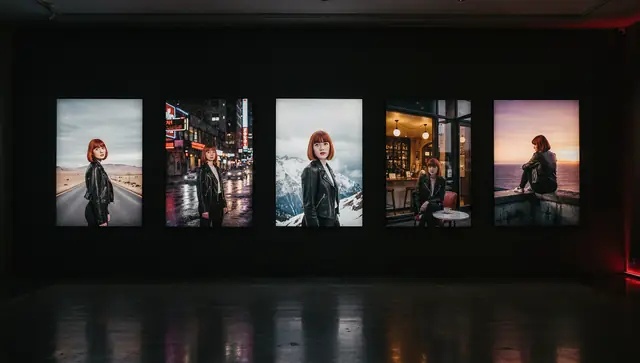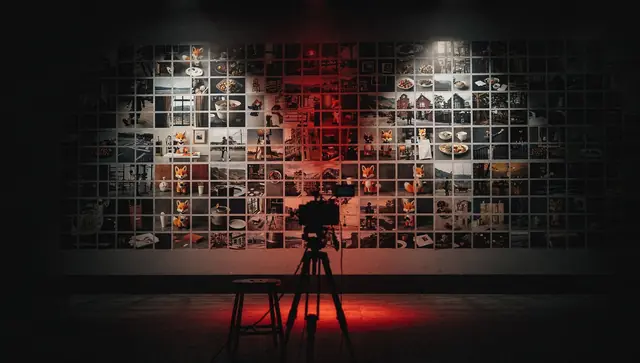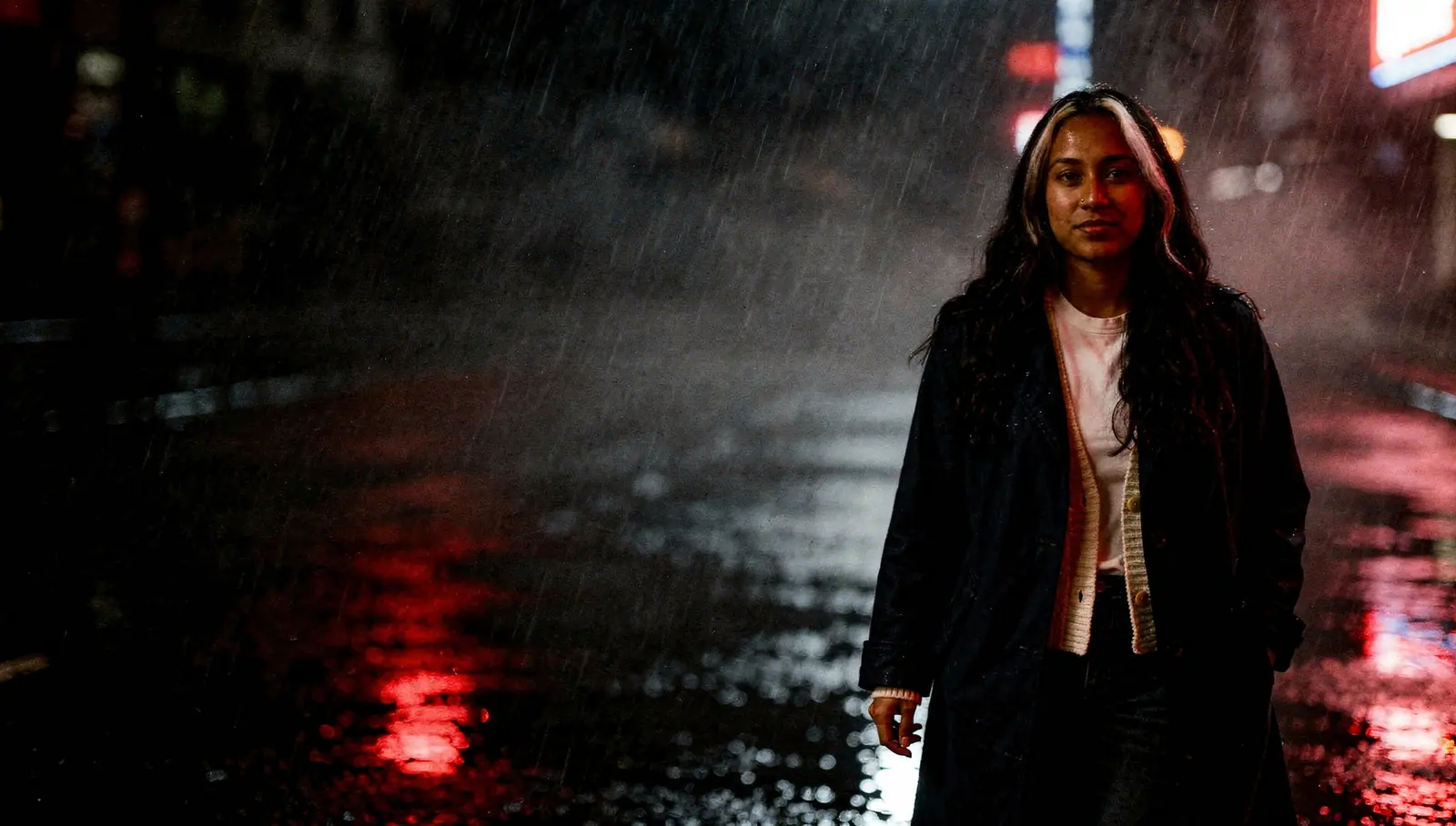
An AI influencer is a virtual character who runs a feed the way a person would: the same face, style and personality in every post, except that every frame is generated. For a company it is a virtual influencer for brands in the literal sense: an ambassador you fully own, a mascot that finally gets its own channel, or the face of a new media project. We create AI influencers for brands, agencies and creators: we design the character with you, train a model on it so it stays recognizable, produce photos and short clips, and, if you want, post them to your own accounts.
If you were looking for an AI influencer agency, here is where we fit: we are the production side, and the work is done by our team, not handed to you as a tool. Strategy, community and growth stay with you, and we say up front what we don’t make.
Who needs an AI influencer
- A brand ambassador you own. An AI brand ambassador belongs to the brand and appears in your product scenes and your visual style whenever you need it. It still needs a clear look, a reason to exist and a tone, which is why stage one happens on paper.
- A mascot that becomes a blogger. Your brand character or illustrated hero gets a LoRA and starts appearing in everyday scenes, seasonal posts and short clips, the same mascot from the first post to the hundredth.
- An agency producing for a client. You own the client relationship and the strategy. We produce the character and the content to your brief and, if needed, post to accounts your client owns, with approvals on your side.
- Your own media project. A character-led channel on a topic you know well: fashion, food, fitness, design. The idea and the tone are yours, the visuals are ours.
What’s included: character, content, posting
Three stages, in this order. You can take all three or stop after the first or the second.
| Stage | What we do | What you get |
|---|---|---|
| 1. Character | Look, style and backstory on paper, dataset, LoRA training, test grid | An approved, recognizable character |
| 2. Content | Photos in different scenes and outfits, short vertical clips, one visual style | Batches of reviewed images and clips |
| 3. Posting (optional) | Content calendar, caption drafts, posting to your accounts | Approved posts on schedule, a report |
Stage two delivers files, as a ZIP archive or a folder link, in 9:16 (1080×1920), 4:5, 1:1 or 16:9. Stage three is the same content, posted for you.
Stage 1: designing the character
Before anything is generated, we agree on the character in writing. It is a short character sheet: appearance (face, hair, build, signature clothing, palette), a backstory, what the character does and cares about, the tone of its captions, and what it never does or wears. It is what keeps the content coherent months later: every brief and every caption is checked against it.
Then the look. If you have references, such as a mood board, sketches or an existing mascot, we start from them. If the character doesn’t exist yet, we generate look options from the brief, you pick one, and we build a set of images of that same character from different angles, in different light and outfits. Reference editing with FLUX.1 Kontext [pro] and Nano Banana (through the Replicate API) helps here: it puts the chosen face into a new pose or scene without training anything.
How we keep the character recognizable
Without training, the face starts to wander by image forty: the hairline shifts, the eye color changes, the signature jacket becomes a different jacket. For an influencer that is a real problem, because followers notice. So the character gets its own LoRA, a small add-on model trained on 5–25 images of it.
- Base model. Our main training pipeline is SDXL (kohya), and we also train on Flux. A LoRA only works within its model family, so we train on the one the content will run on.
- Captions. Each training image gets a caption you can review. Whatever the captions describe (outfit, background, pose), the model treats as changeable; whatever they leave out, it learns as part of the character.
- Test grid. Before any volume, we generate a grid: close-up and full figure, different light, outfits and settings. If it doesn’t look right, we find the cause and retrain before any bulk run.
The honest limit: no LoRA gives perfect likeness in 100% of frames. A good one holds the face and proportions reliably, not pixel for pixel. Small details are the weakest point: jewelry, tattoos, text on clothing. Off frames are removed by hand before you see a batch, and so are clips where the face drifts during motion.
More on training is on character LoRA training, and on choosing the images in the guide how many photos a character LoRA needs.
What AI influencer content we make, and what we don’t
What we make:
- Photos. The character in different scenes, outfits and seasons: feed posts, carousel sets, story formats, and your product in the frame when needed (through reference editing or a separate product LoRA). Every batch runs on the same generation template, so the look stays one style week to week. See bulk image generation.
- Short vertical clips. Our video pipeline is WAN 2.2 image-to-video: an approved still becomes a 5-second clip with movement and camera motion, such as a turn of the head or a slow push-in, vertical 9:16 by default. Clips are silent; if you need music in the file, send us a track you have the rights to use. If you just want the result, we can also make clips through commercial video models by API, on request. See bulk video generation.
- Caption drafts in the character’s tone, written to the character sheet, for your approval.
What we don’t make:
- talking-head videos, voiceover, voice cloning or lip-sync;
- live streams;
- replies to comments and direct messages, or any other conversation with followers;
- adult, explicit or suggestive content, with any character, for any platform;
- lookalikes of celebrities, or of any real person without their consent.
If your plan depends on any of these, say so in the brief. We would rather say no at the start than halfway through.
Posting to your accounts
Posting is optional. If you take it, we publish approved content to your own Instagram and Threads accounts according to the agreed content plan. Other platforms on request, if we can take them on.
- You see every slot in advance: the image or clip, the caption draft and the time. Nothing goes out without your approval.
- The accounts are yours. We don’t create accounts for you: you create the character’s account, give us access and can revoke it at any moment.
- You can pause or stop at any time, and you get a report on what was published and when.
What we don’t promise: follower growth, reach, engagement or monetization, or how a platform’s algorithm and moderation will treat a post. The report is about publishing, not performance. The full process is on the content factory page.
Being open that the character is virtual
Platforms have their own rules for AI-generated images and video, and for posts that promote a product. In a number of countries there are also rules on AI-generated content and on advertising that may require labeling. They differ and change over time, and we don’t give legal advice: check what applies to you with your lawyer.
Our recommendation is simple: say openly that the character is virtual, in the bio and with the platform’s AI label where one exists. An audience that finds out later is a reputational risk the brand doesn’t need. How your posts are labeled, we agree before the first post and keep to it afterwards. We follow the platforms’ rules on AI content.
Who owns the character
- The character is yours: the look, the backstory and the name you give it. Whatever rights we have in what we generate pass to you; what you may do with it also depends on the model licenses. We don’t use your character or content for other clients.
- Whether the trained LoRA file is handed over, and on what terms, we agree before training.
- A real person as the base (you, a team member, a model) only with that person’s consent and rights to their likeness, confirmed before we start.
- Celebrities and other companies’ characters or brands: no.
Price and how to start
| What | Price |
|---|---|
| Character: sheet, dataset, LoRA training, test grid | from $99, one-time |
| Images with the character | from $0.10 each |
| Short clips, 5 seconds | from $1.50 each |
| Posting to your accounts | quoted individually |
Setup and the trial batch are included in the content order; the minimum order is $50. The posting quote depends on the platforms, frequency, the mix of images and video, and whether we draft the captions. Payment and timeline are agreed after the brief and the trial batch.
- Brief with references. Who the character is for, references or an existing mascot, platforms, what content you need and how often.
- Character and test grid. Character sheet, dataset, LoRA training and a grid for your approval.
- Trial week. A week of photos, clips and caption drafts for your approval. This is where the style gets tuned, before anything goes out regularly.
- Schedule. Batches prepared ahead of time and, if you have taken posting, published on the agreed plan, with a report after each period.
Start with your character
Tell us about the character in the request form: who it is for, your references or existing mascot, what content you need, and whether you want us to post it. We will reply with questions, the route and a price estimate.